
Why strategic workforce planning must go beyond technical training.
By 2030, the core skills our organisations will rely on will look very different. According to the latest Future of Jobs Report by the World Economic Forum, the biggest shift isn’t just technological, it’s human.
This year’s report, based on insights from 1,000 global employers representing over 14 million workers, outlines a clear trend – while AI and big data remain crucial, it’s “softer” skills like resilience, curiosity, and systems thinking that will define future ready capability.
But these aren’t soft skills. They’re strategic ones, and they’ve been overlooked for far too long.
Strategic Leaders Need a Skills-Based Approach
If you’re in HR, L&D, or responsible for capability building, this report should prompt a shift in how you approach workforce planning. Too many organisations still prioritise technical expertise, what people know, over the behaviours and mindsets that shape how they show up, lead and grow.
The most in-demand skills by 2030 include:
- Resilience, flexibility and agility
- Leadership and social influence
- Curiosity and lifelong learning
- Creative and analytical thinking
- Motivation and self-awareness
- Systems thinking
These aren’t “nice to have.” They are non-negotiable. They’re also the hardest to teach, develop and embed, because they’re deeply behavioural, not just cognitive.
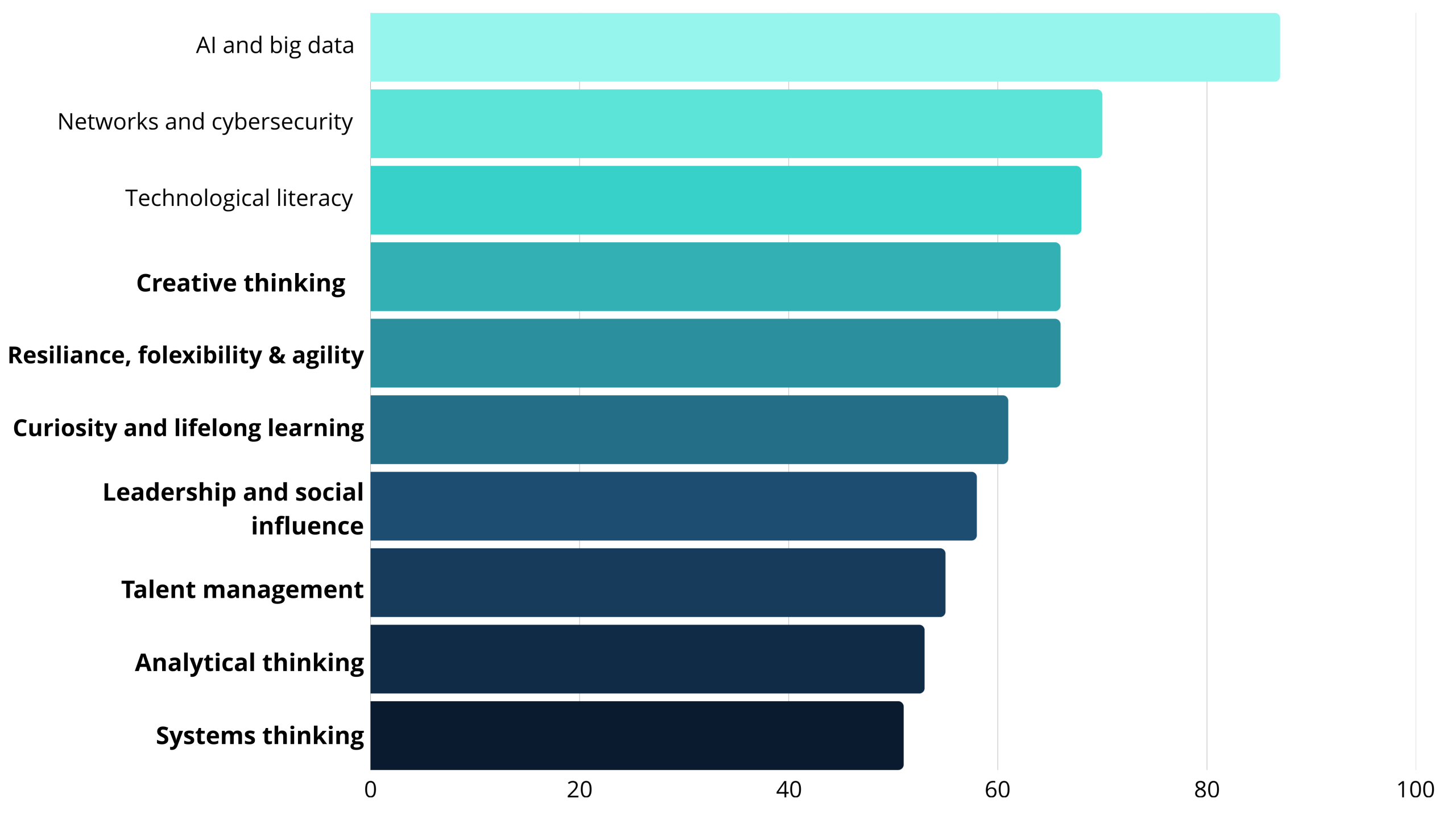
Top 10 skills on the rise based on increasing importance
Capability Gaps Are The Biggest Barrier To Business Transformation
Many organisations still lack a structured view of what “future ready” skills actually look like across functions. Figure 3.6 in the WEF report shows that behavioural skills like resilience, curiosity, and leadership sit squarely in the top-right quadrant of ‘core skills in 2030’. HR teams should move beyond generic skills lists and define role-specific, observable behaviours linked to business outcomes. This means reviewing your current capability frameworks and strategic goals. Where do skills like resilience, adaptability, and systems thinking show up (if at all)? Start by mapping the behaviours that will define successful performance in your evolving roles, especially those at the leadership and critical capability level.
The report also highlights that roles requiring resilience, flexibility, and systems thinking are among the fastest growing, while roles lacking those proficiencies are most at risk of decline. This creates a tangible opportunity to use your strategic workforce planning processes to identify which skills your business is underleveraging, and build structured upskilling programmes around them.
What HR Must Do Differently
Many of the trends highlighted in the WEF report like AI integration, green transition and demographic shifts are already reshaping work. But capability gaps are widening, and that’s where HR has a vital role to play.
Reframe “soft skills” as essential leadership and performance drivers
It’s time to retire the term “soft skills” altogether. Start by naming these skills clearly and integrating them into your competency models, performance frameworks, and leadership expectations.
Build coaching and feedback cultures that promote resilience and self-awareness
Skills like emotional intelligence and self-awareness don’t develop through theory alone. They require regular, real time practice. Focus on building coaching and feedback habits into everyday culture, not just for leaders, but for teams at every level. Practice more check-ins, more peer feedback, more space for reflection, followed by practical training to make it stick.
Make curiosity and systems thinking part of your leadership development toolkit
Being strategic in today’s environment requires the ability to zoom out. As we discuss in Episode 1 of The Strategic Leader Podcast, thinking more strategically means stepping off the dancefloor and onto the balcony; seeing the bigger picture, noticing patterns, and challenging assumptions across the system, rather than simply reacting to what’s right in front of you.
Embed behavioural capability in succession planning and performance frameworks
Too often, behaviours are sidelined in favour of technical output or experience. But the ability to collaborate, flex, lead change and build trust are the very things that will drive success in more fluid, AI-augmented organisations. Make these visible in how you assess, promote and reward , not just what people deliver, but how.
Prepare people for uncertainty, not just change
Future-ready organisations won’t just manage change better, they’ll create cultures that are more comfortable with not knowing. Build psychological safety and train leaders to communicate with honesty and confidence even in ambiguity. Support your people to stay adaptable, open-minded and proactive in shaping what comes next.
Build the business case for behavioural upskilling
Take your insights to leadership. Show where behavioural capability gaps are holding back strategic goals, and recommend targeted development initiatives that go beyond compliance training. Link behavioural upskilling to retention, engagement, and performance. This will give you the buy in you need to move from recognition to action.
Why This Matters More Than Ever
Most organisations are still heavily weighted toward technical training. But technical skills have a shelf life. Human skills compound.
Capabilities like empathy, influence and learning agility are what enable innovation, adaptability and long-term impact. They underpin trust, team dynamics and strategic decision making. In a world of constant disruption, that makes them a serious competitive advantage.
As discussed in our podcast episode “What skills will we need in 2030?”, it’s not just about hiring for these capabilities, but embedding them into how people are supported, promoted and developed.
HR’s Next Step To Make It Actionable
If you’re asking yourself “How do we actually build this?” you’re not alone.
How to Link Pay & Performance is a practical guide to building fairer, more motivating reward strategies that align with real contribution, not just outputs.
Get your free copy below.
Remember that the HR infrastructure also needs to be future-proof. Employees will increasingly expect greater transparency, so download our EU Pay Transparency Compliance Checklist, a simple way to assess where you are now and what to prioritise next to ensure your infrastructure is fit for future purpose.
These resources connect strategic reward with the skills and infrastructure we’ll need tomorrow.
As AI reshapes roles and expectations shift, HR can’t afford to be reactive. This is our moment to proactively steer the workforce strategy, to define the skills that matter, invest in the culture that builds them, and shape leadership for what’s coming.
If you need support to make this shift, let’s start with a quick chat. Whether you’re refining your capability strategy or aligning reward with skills, I can help you explore what your workforce needs next.