
Effective leadership requires confidence. Confidence is the skill that allows leaders to navigate challenges, make tough decisions, and inspire others. But true confidence goes beyond extroversion or the ability to perform under pressure. It’s about cultivating an intrinsic sense of self-worth and capability that sustains you through the highs and lows of leadership. In this guide, we’ll explore the different dimensions of confidence, how it evolves, and practical strategies for building and maintaining it.
Understanding Confidence
Confidence is often misunderstood. Many people equate it with extroversion or assertiveness, believing that confident people are always outgoing and unafraid to speak up. However, confidence comes in many forms. It can be quiet and understated, rooted in a deep sense of self-assurance rather than a need to dominate a conversation or situation.
This broader understanding of confidence allows us to recognise that it’s not about how we present ourselves outwardly but how we feel inwardly. True confidence is the ability to trust in our decisions and capabilities, even when facing uncertainty or opposition.
The Impact of Age and Wisdom on Confidence
As we age, our understanding of confidence often deepens. In our younger years, confidence might be tied to external achievements—getting a promotion, receiving praise, or gaining recognition. We seek validation from others, and our self-esteem can fluctuate based on how well we meet these external benchmarks.
However, with age and experience comes wisdom. We begin to see that true confidence is less about external validation and more about an internal sense of self-worth. This shift allows us to approach challenges with greater calm and assurance, knowing that our value doesn’t depend on others’ opinions or our latest accomplishments.
Why Confidence Becomes a Leadership Challenge
Many people assume confidence improves automatically with seniority, but leadership often introduces new confidence challenges. Promotion brings greater visibility, increased responsibility and more complex decisions. Leaders are expected to operate with certainty while navigating ambiguity.
Executive coaching conversations frequently reveal that confidence issues rarely stem from capability gaps. More often, they emerge during periods of change, growth or increased responsibility. Common examples include:
- Leading larger teams for the first time
- Presenting to Boards or executive teams
- Navigating organisational change
- Managing conflict or difficult stakeholder relationships
- Taking on broader strategic responsibilities
- Moving from functional expertise into enterprise leadership
Understanding that these experiences are normal can help leaders approach confidence challenges with greater self-awareness and perspective.
Self-Esteem vs. Self-Worth
A key aspect of confidence is understanding the difference between self-esteem and self-worth:
Self-Esteem
Self-esteem is the evaluative aspect of self-perception that reflects how individuals assess their value based on achievements, capabilities, and social comparisons. It is influenced by external factors such as performance in academic or professional settings and feedback from peers and mentors. Consequently, self-esteem tends to fluctuate in response to success or failure and varies with changes in external validation and accomplishments.
For example: Alex feels great after receiving positive feedback and job promotion, which boosts their self-esteem. However, if they don’t get the promotion they hoped for or receive negative feedback, their self-esteem may decrease as they begin to question their abilities and achievements. In this case, Alex’s self-esteem fluctuates based on external validation and professional outcomes.
Self-worth
Self-worth represents an intrinsic and stable sense of personal value that is not contingent upon external achievements or social comparisons. It is the fundamental belief in one’s inherent value and dignity, which remains constant regardless of external circumstances or performance outcomes. This concept emphasises a core, unchanging recognition of one’s worth that is independent of external validation.
For example: Alex does not get a promotion at work. Although they are disappointed, they continue to feel a deep sense of self-respect and confidence in their abilities. Alex understands that this one outcome does not solely define their worth but is rooted in their overall character and contributions. This inner sense of value remains steady, regardless of external achievements or setbacks.
When we recognise that our worth isn’t defined by how things turn out, we open the door to true confidence. It’s reassuring to know that even if things don’t go as planned, it doesn’t change our inherent value. This understanding allows us to approach tasks with a sense of calm, knowing that, regardless of the outcome, everything will still be okay. It gives us the freedom to move forward confidently, knowing that our worth remains intact no matter what happens.
Leadership Confidence Styles
Confidence is not a one-size-fits-all trait. In her book Happy High Status, Viv Groskop introduces various styles of confidence, each suited to different personalities and situations:
Entertaining Confidence is the ability to use humour and perform confident behaviour, even when true confidence might be lacking. It’s about projecting a sense of assurance through wit and charisma, using humour as a tool to connect with others and ease tension.
Leaders with entertaining confidence can mask their insecurities by engaging and entertaining those around them, often turning nervous energy into a lively, dynamic presence. This style embodies the idea of “feeling the fear and doing it anyway,” leveraging humour and charm to navigate challenging situations while building an atmosphere of positivity and approachability.
Dominant Confidence is about commanding a room with presence and assertiveness. It involves taking charge decisively and leading boldly, especially in high-stakes situations. This type of confidence doesn’t shy away from making tough calls or standing firm in decisions, even when under pressure.
Leaders with dominant confidence are often the ones who set the pace and direction, inspiring others to follow through with their clear vision and strong will. While assertive, they balance their approach with respect and emotional intelligence, ensuring that their strength empowers rather than intimidates those around them.
Quiet Confidence is about creating a space where diverse ideas can coexist without feeling threatened. It involves the ability to accommodate competing perspectives and remain open to disagreements while maintaining balance and calmness. This type of confidence is not about having all the answers or winning every argument; instead, it’s about holding different ideas in a space where exploration is encouraged.
Leaders with quiet confidence invite discussion and value the input of others, fostering an environment where it’s safe to question, challenge, and collaborate. This approach helps to build stronger, more inclusive teams and promotes thoughtful decision-making.
The above confidence styles demonstrate that confidence can be expressed in diverse ways, allowing leaders to find and develop a style that feels authentic to them.

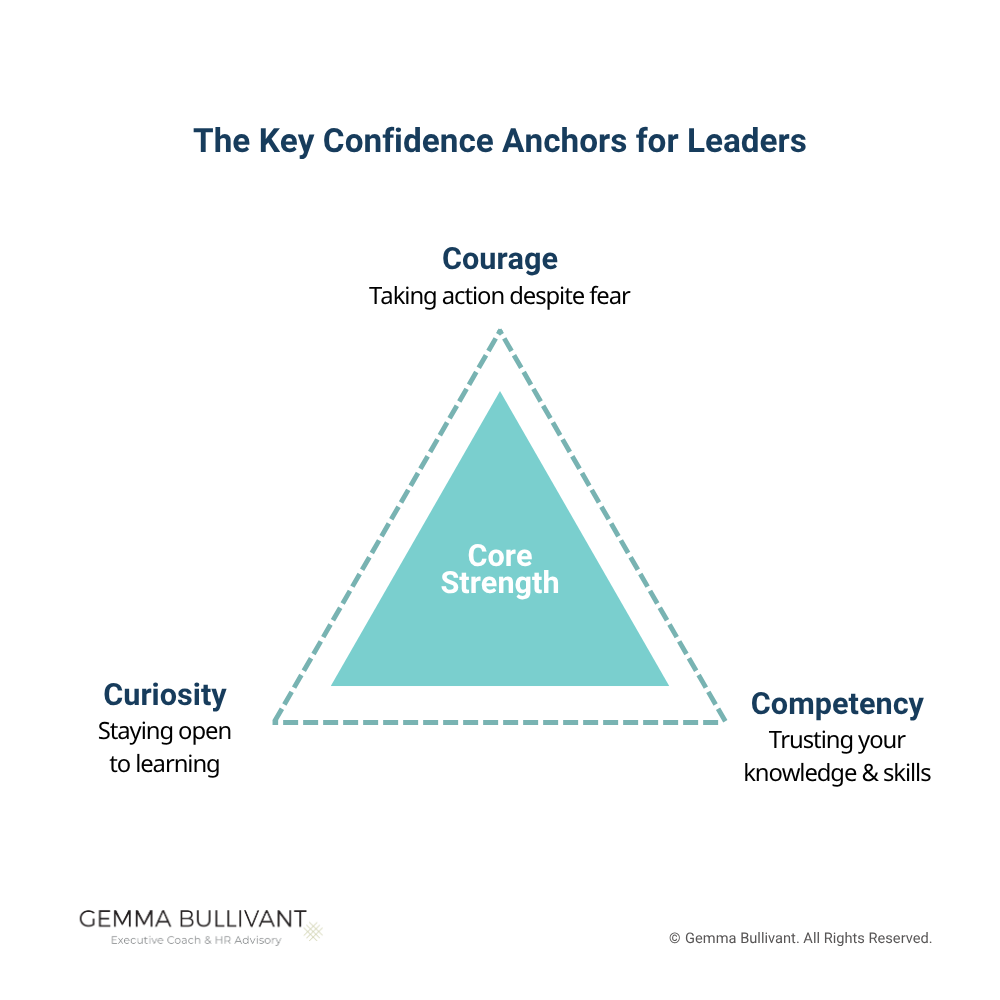
The Three Cs: Competency, Courage, and Curiosity as Confidence Anchors
Leading effectively involves more than just having a strong presence—it requires a solid foundation of confidence. That’s where the “Three Cs” come into play: Competency, Courage, and Curiosity. These elements are crucial for building authentic confidence.
Competency Mode is grounded in a deep belief in your abilities. The confidence comes from knowing you’re skilled and capable and that you’ve earned your place in the situation at hand. When you focus on your competency, you remind yourself that the challenges you’re facing aren’t as overwhelming as they might initially seem. Instead of allowing stress to take over, you draw on your expertise and experience to navigate the situation calmly.
Competency means trusting that you’re prepared, that you have the knowledge and skills required, and that you’re in this position because you excel at what you do. This mindset not only helps you perform better under pressure but also allows you to approach challenges with a sense of clarity and purpose rather than anxiety or self-doubt.
Courage Mode is the essence of true confidence, not in the absence of fear but in the willingness to act despite it. Courage empowers you to take risks, make tough decisions, and face challenges head-on, even when the path forward is uncertain. It’s about trusting yourself to navigate whatever comes your way, knowing that fear is a natural part of growth and leadership.
In Courage Mode, you embrace the unknown with the conviction that you have the inner strength to handle the outcomes, whatever they may be. This mindset pushes you beyond your comfort zone, enabling personal and professional growth through decisive action.
Curiosity Mode is about maintaining an open and inquisitive mindset that keeps you receptive to new ideas and perspectives. It fosters continuous learning and adaptability, which are crucial for successfully navigating complex and changing situations. When operating in Curiosity Mode, you view challenges not as threats to your confidence but as opportunities for growth and discovery.
This approach encourages you to explore different angles, ask questions, and seek out innovative solutions, all of which contribute to a more flexible and resilient leadership style. By staying curious, you remain engaged and proactive, turning uncertainty into a chance to learn and evolve.
Recognising and Reducing Stress Responses
Stress is a natural part of leadership, but it can undermine confidence if not managed effectively. High-stress levels can trigger self-doubt, reactive decision-making, and burnout. Therefore, it’s crucial to recognise and address stress responses before they erode your confidence.
Practical strategies for managing stress include mindfulness practices, regular physical activity, and ensuring time for rest and reflection. It is possible to maintain your confidence and lead with clarity and purpose by maintaining a balanced approach to stress.
The Role of Core Strength in Leadership Confidence
Just as physical core strength supports your posture and stability, inner core strength—comprising resilience, self-awareness, and emotional intelligence—supports your confidence. This inner strength allows you to remain grounded and resilient, even when facing adversity.
Building core strength involves consistent self-reflection, emotional regulation, and developing a growth mindset. It’s about creating a strong foundation of self-worth and emotional resilience that will support you through the challenges and uncertainties of leadership.
Cultivating True Confidence
True confidence is not about seeking external validation or projecting a certain image. It’s about nurturing an intrinsic sense of self-worth and capability that allows you to lead authentically and resiliently. By understanding and embracing different styles of confidence and by anchoring yourself in competency, courage, and curiosity, you can develop a robust and adaptable form of confidence.
As you continue on your leadership journey, remember that confidence is a dynamic trait that evolves with time and experience. By recognising and managing stress, building your core strength, and staying curious and courageous, you can maintain your confidence and lead with strategic calm and assurance.

Leadership Coaching with Gemma Bullivant
Many leaders assume confidence is something they need to develop before they can take the next step in their career.
In reality, confidence often grows through taking the step itself.
Through executive coaching, I help senior leaders understand the beliefs, behaviours and thought patterns influencing their confidence. Together, we explore practical ways to strengthen self-belief, navigate uncertainty and lead with greater clarity and impact.
Whether you’re stepping into a more senior role, leading through change or simply looking to strengthen your leadership presence, coaching can provide the space to reflect, challenge assumptions and build lasting confidence.
Listen to the Key to Confident Leadership Podcast Episode
Want to explore this topic further? In Season 2 Episode 8: Building Core Strength: The Key to Confident Leadership we take a deeper look at leadership confidence and why it often becomes more challenging, not less, as careers progress.
We explore the difference between self-esteem and self-worth, the role confidence plays in effective leadership, and how the Three Confidence Anchors – Competency, Courage and Curiosity, can help leaders navigate uncertainty with greater confidence and clarity.